
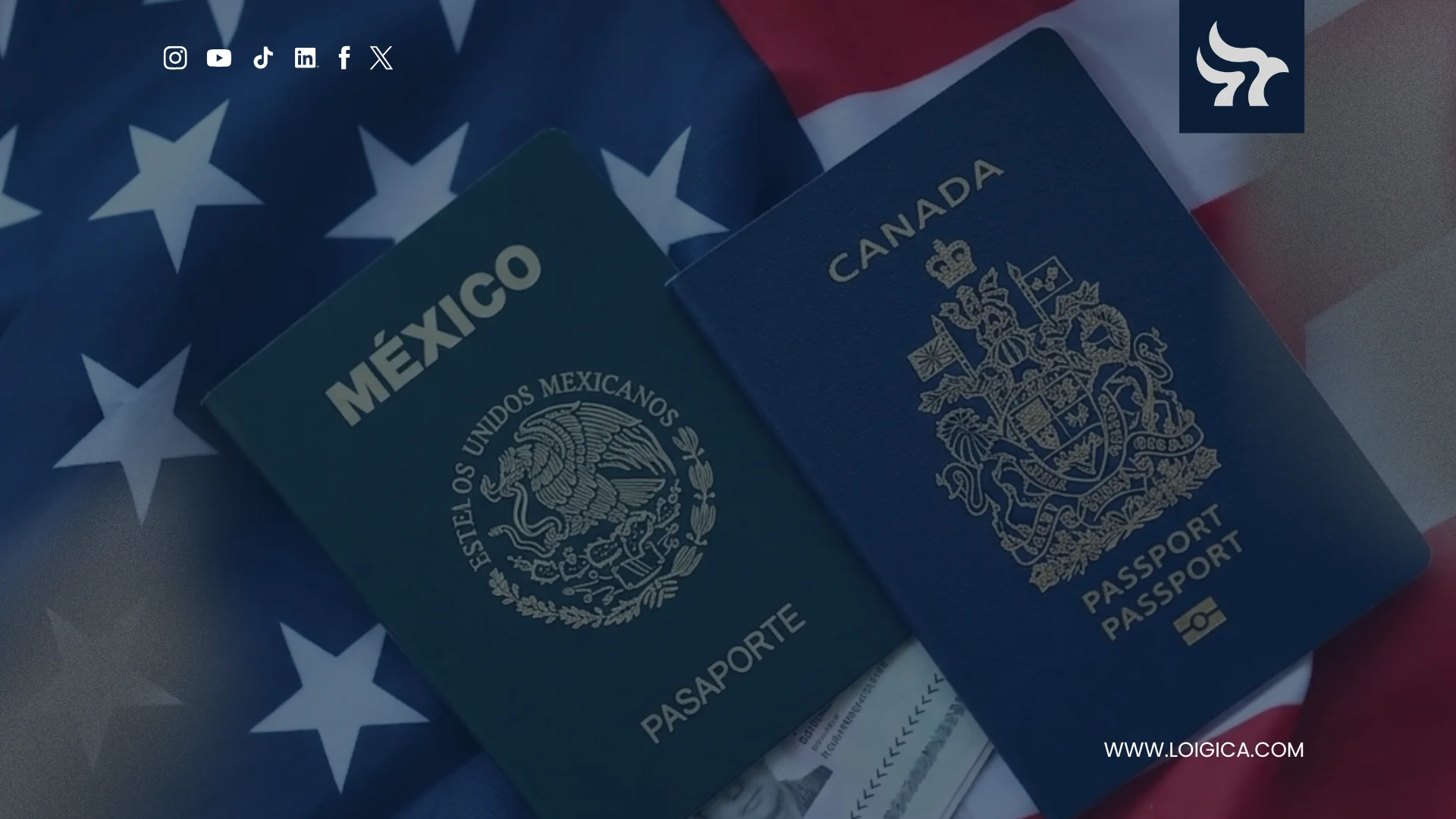
At Loigica, we often get asked about possible paths for professionals who want to work in the US. That is why, in this article, we are going to tackle one common path, the TN visa. Especially the TN visa professions list, which will help you understand if your profession applies to this path.
In the case of many Canadian and Mexican professionals, TN status can provide a direct path to temporary work in the United States. The process may move faster than other employment categories, especially for Canadian citizens who apply at a port of entry.
That speed can create overconfidence.
In our work with professionals and employers, we see applicants focus on the job title while overlooking the legal classification. A TN case works when the USMCA profession, actual job duties, professional credentials, and employer documentation support the same position.
What the TN visa professions list means
TN classification is available only to citizens of Canada and Mexico who will work in a profession included in the USMCA list.
The United States position must require a professional in that category. The applicant must also meet the listed education, licensing, or experience requirements.
A company can call a position anything it wants internally. The officer will still review the daily duties and decide whether they fit the treaty profession.
TN visa professions list
At Loigica, we group the official list of TN professions into four broad areas. We hope this chart will help you understand it clearly.
| Category | Eligible TN professions |
|---|---|
| General professions |
|
| Medical and allied professions |
|
| Scientists |
|
| Teachers |
|
- Accountant
- Architect
- Computer Systems Analyst
- Disaster Relief Insurance Claims Adjuster
- Economist
- Engineer
- Forester
- Graphic Designer
- Hotel Manager
- Industrial Designer
- Interior Designer
- Land Surveyor
- Landscape Architect
- Lawyer
- Librarian
- Management Consultant
- Mathematician or Statistician, including Actuary
- Range Manager or Range Conservationist
- Research Assistant at a post-secondary institution
- Scientific Technician or Technologist
- Social Worker
- Sylviculturist or Forestry Specialist
- Technical Publications Writer
- Urban Planner or Geographer
- Vocational Counselor
- Dentist
- Dietitian
- Medical Laboratory Technologist or Medical Technologist
- Nutritionist
- Occupational Therapist
- Pharmacist
- Physician for teaching or research only
- Physiotherapist or Physical Therapist
- Psychologist
- Recreational Therapist
- Registered Nurse
- Veterinarian
- Agriculturist or Agronomist
- Animal Breeder
- Animal Scientist
- Apiculturist
- Astronomer
- Biochemist
- Biologist, including Plant Pathologist
- Chemist
- Dairy Scientist
- Entomologist
- Epidemiologist
- Geneticist
- Geochemist
- Geologist
- Geophysicist
- Horticulturist
- Meteorologist
- Pharmacologist
- Physicist
- Plant Breeder
- Poultry Scientist
- Soil Scientist
- Zoologist
- College Teacher
- Seminary Teacher
- University Teacher
Most categories require a baccalaureate or licenciatura degree. Some accept a professional license or a specific combination of post-secondary education and experience. General work experience usually cannot replace a degree when the category specifically requires one.
If you’re in your TN process or about to start one, at Loigica, we have a team of immigration lawyers who can help you get your TN visa. Contact us here to schedule a meeting with our team.

Profession, duties, and credentials must align
When we work with a TN case, we review three areas early in the process:
- the USMCA profession selected;
- the work the professional will actually perform;
- the applicant’s degree, license, or qualifying experience.
Remember that a problem in any one of these areas can weaken the application.
For example, an engineering degree does not automatically make every technical position an Engineer role. Or a business degree does not automatically support the Management Consultant classification. The degree must connect logically with the profession and the proposed duties.
The strongest cases present a consistent record. We advise our clients to aim for consistency. In other words, the employer letter, résumé, degree, transcripts, organizational information, and interview answers should describe the same professional role.
TN visa Computer Systems Analyst cases
Computer Systems Analyst is one of the categories we have more inquiries about, and we review most carefully.
Technology companies often use broad internal titles. A position may be called Systems Analyst, Software Engineer, Developer, Solutions Architect, or Technical Consultant. Officers usually focus on the work itself.
A Computer Systems Analyst typically studies an organization’s systems, identifies business or technical needs, and recommends technology solutions. A role centered on writing code, building software products, or performing engineering work may raise classification questions.
Our strategy begins with the daily responsibilities. Changing the title without addressing the actual duties does not solve the issue.
If you work in any of these areas and need professional legal assitance, contact us here, and start your journey to your TN visa approval.

Employer support letter mistakes
The employer support letter plays a central role in a TN application. It should identify the treaty profession and explain the professional activities, anticipated period of employment, qualifications, and compensation.
We often see otherwise viable cases weakened by letters that:
- rely on a generic template;
- use vague or inflated duties;
- copy language from the résumé without explaining the position;
- mix duties from several different professions;
- fail to connect the applicant’s credentials with the role.
The letter should give the officer a clear reason to place the position within the selected TN category. More pages do not necessarily create a stronger letter. Precision and consistency carry more weight.
TN requirements for Canadians and Mexicans
We want to emphasize that Canadian and Mexican citizens follow different procedures.
Canadian citizens generally do not need a TN visa stamp. They may request TN classification directly at a qualifying U.S. port of entry, airport handling international traffic, or preclearance location. The border interview therefore, becomes a key part of the process.
Mexican citizens must obtain a TN visa through a U.S. embassy or consulate before requesting admission. They generally submit the DS-160, attend a visa interview, and present the required professional and employment documentation.
Despite that difference, both must show:
- Canadian or Mexican citizenship;
- a prearranged professional position;
- an occupation included on the TN list;
- the required education, license, or experience;
- documentation describing the duties and employment terms;
- temporary intent.
TN admission may be granted for up to three years. Nevertheless, the actual timing varies by procedure, consular appointment availability, documentation, and whether the case requires additional review. That is why you need to remember that each case is different and understand your particular case.

What we review before a TN application
Before a professional applies, we compare the position against the treaty language.
We review the job description, degree alignment, transcripts, licenses, professional experience, employer support letter, compensation, and intended period of work. For Canadian applicants, we also prepare for the questions that may arise at the port of entry. For Mexican applicants, we review the consular process and interview record.
The TN category can be efficient when the case is a good fit. Small inconsistencies can also become significant at the border or consulate.
Our recommendation is to review the classification before finalizing the letter or scheduling travel. Profession, duties, credentials, and documentation should tell one clear story.
If you are planning to apply for a TN visa, at Loigica, we will assist you in preparing a strong case for your application. Contact us here to schedule a meeting to review your particular case.

Harry Tapias Esq.
CEO, attorney, and co-founder of Loigica
Disclaimer
This article provides general information about TN professions and USMCA professional classification. It does not provide legal advice or create an attorney-client relationship. Immigration rules, procedures, fees, and agency guidance may change. Each position and applicant should be reviewed according to the specific facts.
Keep learning about employment visas
Review Loigica’s resources on employment visas, professional immigration, business expansion, employer compliance, and cross-border immigration between Canada, Mexico, and the United States.

TN Profession and Eligibility Review
Are you a Canadian or Mexican professional considering TN status? Loigica can review your profession, job duties, credentials, employer letter, and application strategy before you apply. Contact us here: