
Several major EB5 fees will more than double starting November 30, 2026.
USCIS has finalized a new fee schedule for the EB5 Immigrant Investor Program. The changes affect individual investors, Regional Centers and other entities involved in EB5 projects.
For investors, the Form I-526E filing fee will rise from $3,675 to $7,850. For Regional Centers, some increases are even larger. An initial Form I-956 filing will jump from $17,795 to $44,115, an increase of 148%.
The final rule takes effect on November 30, 2026. Applications, petitions and requests postmarked on or after that date must include the new fees.
How much are EB5 fees increasing?
The biggest changes affect Form I-526, Form I-526E and several Regional Center filings.
| EB5 filing | Current fee | New fee | Change |
|---|---|---|---|
| I-526, standalone investor | $3,675 | $7,615 | +107% |
| I-526E, Regional Center investor, initial | $3,675 | $7,850 | +114% |
| I-526E amendment | $3,675 | $7,775 | +112% |
| I-829, removal of conditions | $3,750 | $5,000 | +33% |
| I-956, initial Regional Center designation | $17,795 | $44,115 | +148% |
| I-956F, commercial enterprise filing | $17,795 | $42,675 | +140% |
USCIS estimates that filing fees across existing EB5 forms will increase by about 70.7% on a weighted-average basis.
Not every fee is increasing. For example, the Form I-956 amendment fee will fall from $17,795 to $9,835. Form I-956G will also decrease, from $3,035 to $2,165.
What will investors pay for Form I-526 and I-526E?
The change is particularly significant for investors preparing their initial EB5 petitions.
A standalone investor filing Form I-526 will pay $7,615, compared with the current $3,675.
A Regional Center investor filing an initial Form I-526E will pay $7,850, compared with $3,675 today.
Those amounts include a new $75 EB5 Technology Fee. USCIS says the technology fee will support improvements to the systems used to process and manage EB5 filings.
The final fees are actually lower than those DHS proposed in 2025. DHS had proposed $9,625 for both initial I-526 and I-526E filings. The final rule reduced those amounts after USCIS updated its workload, cost and revenue assumptions.
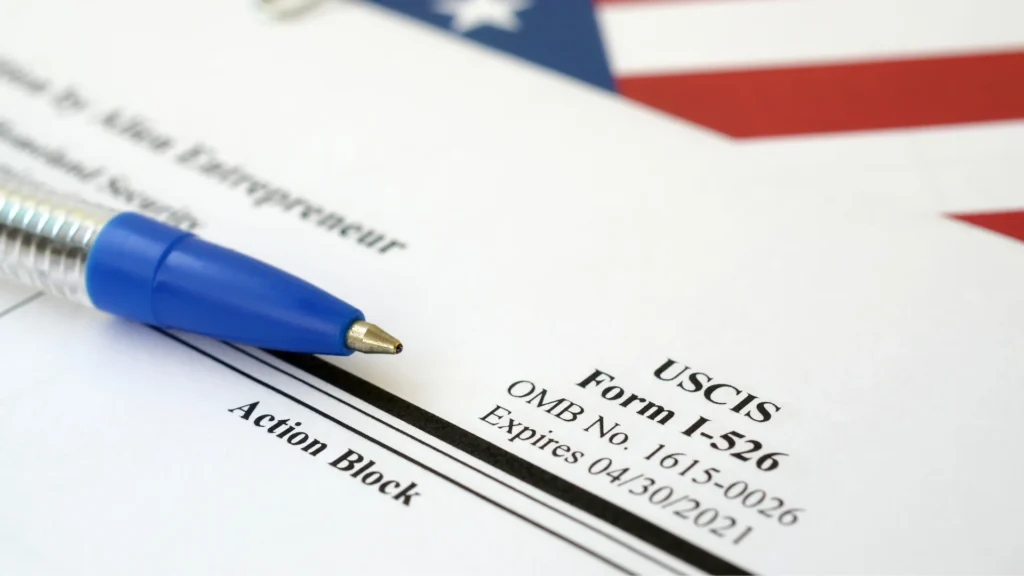
Regional Center fees see some of the largest increases
Regional Centers will face the largest percentage increases under the new schedule.
An initial Form I-956 application will cost $44,115 starting November 30. That is $26,320 more than the current $17,795 fee.
The Form I-956F fee will increase to $42,675, up from $17,795.
However, USCIS took a different approach to amendments. The I-956 amendment fee will decrease to $9,835 because DHS changed how it allocates certain Regional Center termination and reaffirmation costs.
For businesses operating within the EB5 ecosystem, that distinction matters. The final rule does not simply apply the same percentage increase to every filing.
USCIS also creates a new $10,330 Form I-527 fee
The rule also introduces Form I-527, Amendment to Legacy Form I-526, with a filing fee of $10,330.
The form applies in specific situations involving investors who filed before the EB-5 Reform and Integrity Act. It can allow certain investors to amend a legacy I-526 petition after events such as Regional Center termination or debarment of an associated entity.
USCIS will not treat the I-527 as a new immigrant petition for priority-date purposes. According to the final rule, the original priority date remains in place.

EB5 Integrity Fund fees are also increasing
DHS also adjusted EB5 Integrity Fund fees for inflation. The I-526E Integrity Fund fee will increase from $1,000 to $1,100.
Annual Regional Center Integrity Fund fees will rise:
from $10,000 to $11,000 for qualifying Regional Centers with 20 or fewer investors;
from $20,000 to $22,000 for other Regional Centers.
DHS based the 10% adjustment on inflation from 2022 through 2025.
These funds support program integrity activities such as audits, investigations, compliance reviews and site visits.
Are the EB5 investment amounts changing?
No.
The new rule changes USCIS filing fees, not the minimum investment required for EB5 eligibility.
The EB5 investment thresholds remain:
$800,000 for qualifying investments in a Targeted Employment Area or infrastructure project;
- $1,050,000 for other qualifying EB5 investments.
The program also continues to require the creation of at least 10 qualifying full-time jobs. That distinction is important. An increase in the I-526E filing fee does not mean USCIS has increased the underlying EB5 investment amount.

Why is USCIS raising EB5 filing fees?
Congress directed DHS to conduct an EB5-specific fee study through the EB-5 Reform and Integrity Act of 2022.
USCIS says the new fees should recover the full cost of administering the program. They also support statutory processing goals and program integrity activities.
According to the final rule, USCIS projects approximately $105 million in annual EB5 program costs, compared with about $56.6 million in projected revenue under the current fee schedule. The agency designed the new fees to address that gap.
USCIS also expects the fee changes to affect roughly 16,600 EB5 filings per year.
Should EB5 investors file before November 30?
The November 30 effective date creates an important planning point for investors who are already preparing a petition.
A filing postmarked before the effective date may fall under the fee schedule in effect at that time. However, the filing date should not be driven by the fee increase alone.
An EB5 petition requires extensive documentation of the investment, source and path of funds, project structure and other eligibility requirements.
Submitting an incomplete case simply to avoid a higher filing fee can create much larger immigration and financial risks.
If you are already preparing an EB5 case, this is a good time to review whether your documentation and filing strategy are on track before the new fees take effect.

Harry Tapias
CEO, Co-Founder and Attorney at Loigica
Disclaimer
This article provides general information about the USCIS EB5 fee rule published on September 30, 2026. It does not constitute legal advice or create an attorney-client relationship. Filing requirements, fees and EB5 eligibility depend on the circumstances of each case. Applicants should confirm the current USCIS fee schedule and filing instructions before submitting any petition or request.
Keep Learning About the EB5 Visa
The filing fee is only one part of an EB5 investment. Investment structure, source of funds, job creation and project selection can all affect the immigration process.
Learn more about EB5 visa requirements and investor immigration options.

Plan Your EB5 Filing
If you are evaluating an EB5 investment or preparing a petition before the November 30 fee change, Loigica can help you review the legal structure, documentation and immigration timeline.