
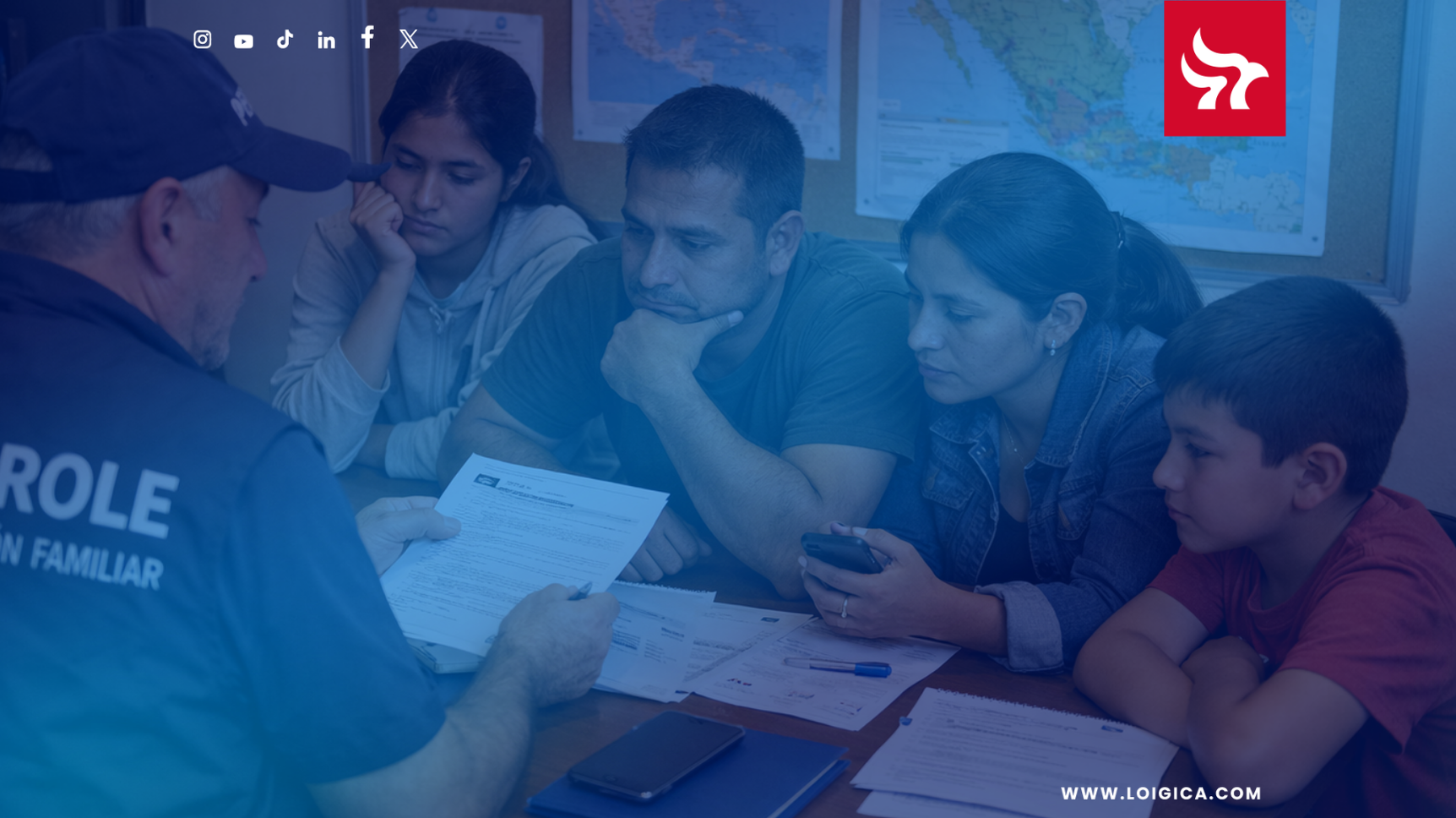
For many families, family reunification parole was, for a time, a bridge: a way to enter United States under a regulated process while waiting for an immigrant visa based on an already-approved family petition.
That bridge was always meant to be temporary, but the government’s recent decision to end all family reunification parole programs has turned it into something more concrete: a specific deadline that forces people to review their case calmly, but seriously.
The notice published by the Department of Homeland Security sets out two central ideas. The first is that the categorical family reunification parole programs for nationals of Colombia, Cuba, Ecuador, El Salvador, Guatemala, Haiti and Honduras are terminated as of 15 December 2025. The second, even more relevant for those already in the country, is that parole granted under those programs will end on 14 January 2026, unless the original parole period expires earlier or the person falls within one of the limited exceptions.
In other words, a status that used to be perceived as an open-ended “in the meantime” now has a clear end point on the calendar.
The clearest exception applies to those who managed to file an adjustment of status application (Form I-485) before 15 December 2025 and still have it pending on the cutoff date. In those cases, DHS has stated that parole will not automatically end on 14 January 2026; instead, it will remain valid until the end of the original parole period or until there is a final decision on the I-485, whichever comes first.
If the adjustment is approved, the person becomes a lawful permanent resident; if it is denied, the notice makes it clear that parole ends on the same day as the denial, unless there is some other legal basis for new parole on a case-by-case basis. In parallel, the notice reminds people that, in theory, they can request re-parole through Form I-131, but it is very explicit that any new grant must be justified by urgent humanitarian reasons or a significant public benefit, assessed individually.
In this context, parole stops being just a bridge and becomes a time boundary: it either turns into something else —an adjustment of status, a planned departure, a new immigration route— or it runs out, with all the consequences of having no valid status.
Legal scenarios worth exploring before your parole expires
From this point on, every family has its own story. Even so, there are general scenarios that help structure the conversation with a lawyer.
One scenario is that of people who already have a clear path to residence from within United States.
These are individuals with an approved family petition (for example, an I-130 filed by a U.S. citizen spouse or lawful permanent resident spouse) who, based on their category, priority date and visa numbers, could be eligible to adjust status without leaving the country.
For them, the key questions are whether the legal framework really allows them to adjust from inside United States —taking into account entries, departures, background and any grounds of inadmissibility— and whether it is feasible to have filed a complete I-485 on time. In this group, the 14 January 2026 deadline intersects with other variables: the Visa Bulletin, USCIS workload and each office’s processing times.
Another scenario is that of people who do not yet have a clearly defined path to residence, but do have family, employment or financial ties that could open options. Here, the conversation usually revolves around three questions: first, whether there is a solid basis for starting a family-based, employment-based or talent-based case that makes legal and economic sense; second, whether that case is better built from within United States or from the country of origin; and third, how to avoid accruing unlawful presence that could later trigger three- or ten-year bars when applying for a future visa.
For many families in this situation, a planned departure —at the right time and under the right conditions— may be less damaging than remaining in the country beyond the parole end date without a concrete plan.
A third scenario is that of people who, in addition to the family dimension, have business or professional projects on the table that could align with other immigration categories: investment visas, employment visas, intracompany transfers, extraordinary ability visas. In these cases, the expiration of family reunification parole forces a reordering of priorities:
what they really want to achieve in United States, which type of visa best matches that project and in which jurisdiction it makes sense to structure companies, contracts and assets. The decision is no longer just “stay or leave”, but how to design a coherent immigration and wealth strategy.
And of course, there are situations in which the analysis concludes that there are currently no viable options beyond parole. That is also a legal answer, even if it is uncomfortable. Knowing it in advance allows people to make informed decisions about returning, relocating to a third country or preserving the possibility of applying for other processes in the future, without adding additional immigration penalties.
In all scenarios, two constants appear. The first is that the relevant information is in the documents: the I-94, parole approval notices, USCIS or National Visa Center letters, invitation emails to the reunification program, work permits and any forms already filed. The second is that decisions should not be based on a social-media thread or a viral video, but on a professional review of the complete case in light of the new rules.
If you or a family member are in United States with family reunification parole and want to understand clearly what the end of family reunification parole means in your specific case, you can schedule a personalized legal review with LOIGICA® by completing this secure form:
Contact us here
📩 marketing@loigica.com | 🌐 loigica.com
This blog was written with asistance of generative AI. It is provided for informational purposes only. It does not constitute legal advice. The information presented here is based on general principles of U. S. immigration laws, as well as general information available for public search on public matters, as of the date of publication. Immigration laws and regulations are subject to change and individual circumstances may vary. If you need expert counceling on immigration matters, contact one of our attorneys.

Summary Administration Florida: Requirements, Process and When It Applies

USCIS Moves Toward Mandatory Online Filing: What the New Rule Means